
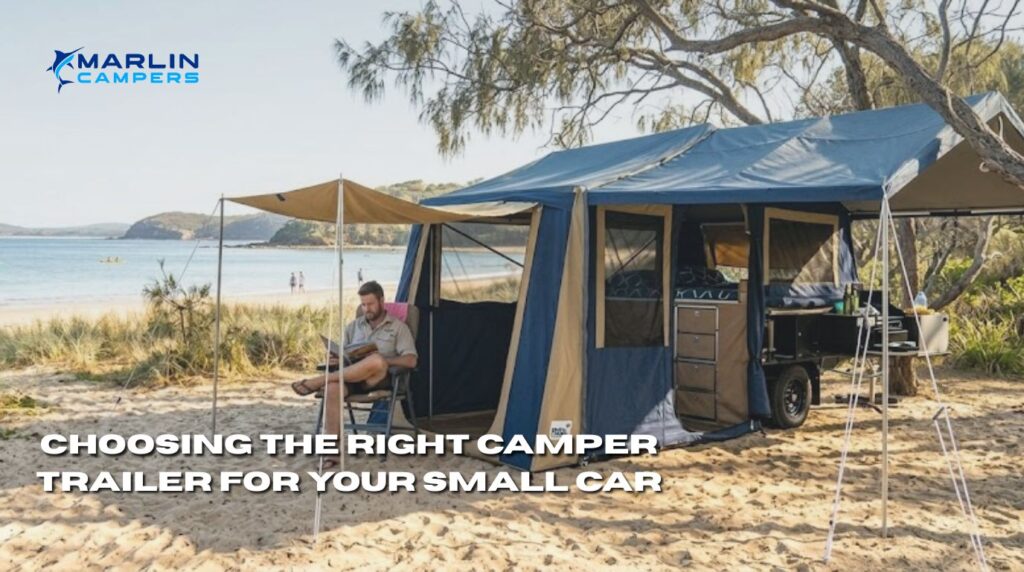
Choosing the Right Camper Trailer for Your Small Car
Table of Contents
Introduction
-
- The Small Car Towing Basics You Need to Know
-
- What is the Best Camper Trailer for a Small Car?
-
- Benefits of Fuel-Efficient Towing Campers
-
- Features of a Compact Camper Trailer
-
- Types of Campers Trailers Suitable for Small Cars
-
- Tips for Safe Towing
-
- Tow Compact Camper Trailers Easily with Your Small Cars
-
- FAQs
Choosing the best camper trailer for a small car doesn’t have to be overwhelming — and at Marlin Campers, we’ve spent nearly two decades making sure it isn’t. Since 2006, we’ve been designing and building Australian-made camper trailers specifically with real towing limits, fuel economy, and genuine on-road comfort in mind.
Whether you drive a compact hatchback or a small SUV, the right match is out there. Our Marlin Cruiser, for example, tips the scales at just 350kg — light enough that practically any car on the road can tow it with ease. It’s that balance of lightweight and liveable that makes the difference between a stressful tow and a genuinely enjoyable trip.
This guide walks you through everything worth knowing before you buy — from understanding your car’s towing capacity and how it affects fuel efficiency, to the practical features that make life on the road comfortable. By the end, you’ll know exactly what to look for, and likely find that the right Marlin is already waiting for you.
The Small Car Towing Basics You Need to Know
Before selecting a camper trailer, it is essential to understand your vehicle’s towing capabilities. Small cars and compact SUVs have limitations compared to larger 4WD vehicles, making weight and design critical factors.
According to the Australian Government’s road safety guidelines, exceeding towing limits increases accident risks and reduces braking efficiency.
What is the Best Camper Trailer for a Small Car?
- Lightweight Design: A lightweight trailer reduces strain on the engine and improves handling.
- Compact Size: A compact camper trailer is easier to tow, park, and manoeuvre.
- Aerodynamic Build: Low-profile trailers create less wind resistance, improving fuel efficiency.
Ideal Choice Includes:
- Soft floor campers
- Forward fold campers
- Hybrid compact campers
Essential Factors to Consider Before Buying
Payload Capacity
Vehicle Compatibility
Suspension System
Braking System
Electric brakes are essential for trailers weighing more than 750 kg.
Benefits of Fuel-Efficient Towing Campers
- Reduced fuel consumption
- Lower engine strain
- Improved long-distance comfort
- Eco-friendly travel
Features of a Compact Camper Trailer
Common Features:
- Lightweight aluminium frames
- Foldable or pop-up designs
- Minimalist interiors
- Quick setup mechanisms
Why It Works for Small Cars:
- Less drag
- Lower towing weight
- Easier storage
Types of Camper Trailers Suitable for Small Cars
Soft Floor Camper Trailers
- Lightweight and affordable
- Ideal for beginners
Hard Floor Campers
- More durable
- Slightly heavier but still manageable
Forward Fold Campers
- Quick setup
- Compact design
Tips for Safe Towing
Before You Travel
- Check tyre pressure (car and trailer)
- Inspect hitch and safety chains
- Ensure proper weight distribution
While Driving
- Maintain longer braking distances
- Avoid sudden turns
- Drive at moderate speeds
Loading Tips
- Keep heavy items low and centred
- Avoid overloading
Tow Compact Camper Trailers Easily with Your Small Cars
FAQs
1. What is the best camper trailer for a small car?